Sympathetic Pain and CRPS Treatment
in Queens, NY
Sympathetic pain is long-lasting pain that the sympathetic nervous system helps keep going, and complex regional pain syndrome (CRPS) is its best-known form. At Queens Pain Clinic in Rego Park, we work out what is driving your pain, then build a plan that can include image-guided sympathetic nerve blocks, spinal cord stimulation, and a rehab program that gets you using the limb again.
Pain that stays severe, swollen, or oddly sensitive long after an injury should not be written off as slow healing. If that sounds familiar, call 1-877-97 NO PAIN and ask about an evaluation, including same-day openings.
Medically reviewed by [Physician name, credentials]. Last reviewed [Month Day, Year].
What is sympathetic pain?
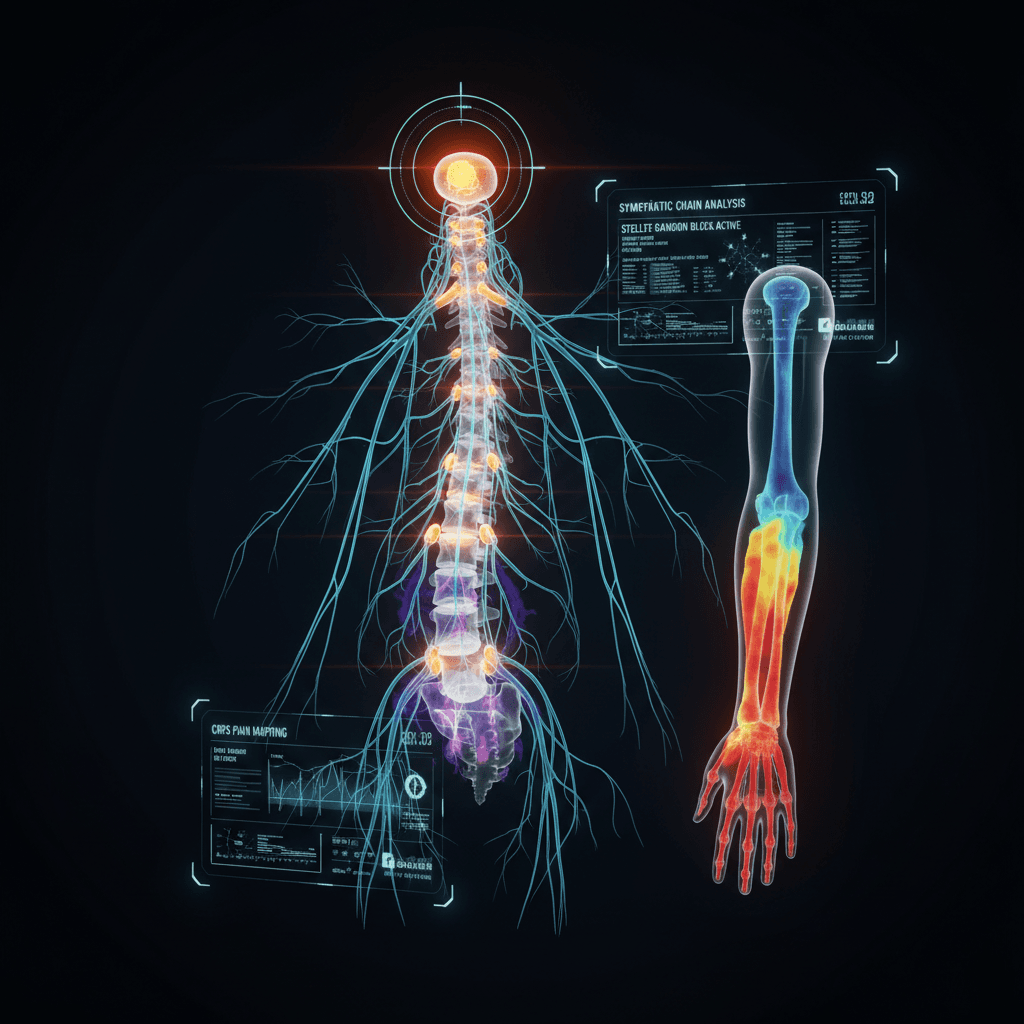
Your sympathetic nervous system runs in the background. It adjusts blood flow, sweating, and skin temperature without any input from you. After most injuries it settles back down. In some people it does not, and the pain stops matching the original injury.
CRPS, RSD, causalgia, sympathetically maintained pain
An arm, hand, leg, or foot, often after a fracture, sprain, surgery, or other injury
Burning or throbbing pain, pain from light touch, swelling, skin color and temperature changes, stiffness
A careful exam using the Budapest criteria, plus tests to rule out other causes. There is no blood test for CRPS.
Stellate ganglion, lumbar sympathetic, celiac plexus, superior hypogastric plexus, and ganglion impar blocks; spinal cord stimulation; coordination with therapy
9701 66th Ave, Rego Park, NY 11374
Researchers think several things go wrong at once in CRPS: nerve signaling, inflammation, and the way the spinal cord and brain process pain. In some people the sympathetic system is part of that picture. Pain that eases when those nerves are blocked is called sympathetically maintained pain, and that response is why a block can help with both diagnosis and relief.
CRPS is uncommon. Fractures, especially of the wrist, are the most frequent trigger, but surgery, sprains, burns, and cuts can start it too. It affects women more often than men, and most people are diagnosed in middle age or later.
Signs and symptoms to watch for
Sympathetic pain conditions look different from one person to the next. These are the patterns we see most often.
If these changes show up after an injury and do not improve as it heals, get checked. Treatment tends to work better when it starts early. Guarding the limb and not using it makes swelling and stiffness worse, so waiting it out is rarely a good plan.
How we diagnose sympathetic pain
No blood test or scan proves CRPS. The diagnosis rests on your history and a careful exam. We look for the mix of symptoms the Budapest criteria describe: sensory changes, differences in temperature and color, sweating and swelling, and movement or tissue changes. We compare the painful limb with the other side.
We also rule out lookalikes. A blood clot, infection, arthritis, a trapped nerve, and circulation problems can all mimic CRPS, so we may order X-rays, ultrasound, MRI, a bone scan, lab work, or nerve testing. Sometimes a diagnostic sympathetic block adds useful information. If your pain drops while the sympathetic nerves are numb, that points to a sympathetic component.
Sympathetic pain treatment options in Queens
No single treatment fixes CRPS. The plans that work best usually pair movement-based therapy with targeted procedures and, when needed, medication. A block is meant to open a window of lower pain so therapy becomes possible. It is not a replacement for therapy.
Stellate Ganglion Block
The stellate ganglion is a cluster of sympathetic nerves at the base of the neck that serves the head, neck, and arm. We place local anesthetic next to it using ultrasound, fluoroscopy, or both. The block is most often used for CRPS in the arm or hand, and sometimes for head and neck pain or poor circulation in the arm. Hot flashes are another use, but that one is off-label and the evidence is still developing, so we go over it case by case. Within minutes the hand usually turns warm and flushed, and the eyelid on that side may droop for a few hours. How much pain relief you get after the numbing wears off varies.
Lumbar Sympathetic Block
The lumbar sympathetic chain runs along the front of the lower spine, roughly at levels L2 to L4. We guide the needle with live X-ray (fluoroscopy) and place anesthetic around the nerves. It is used for CRPS in the leg or foot, phantom limb pain, and some pain tied to poor blood flow in the legs. A warmer foot afterward is a good sign the block reached its target. If you get clear but short relief, we talk through what comes next, including repeat blocks and other options.
Celiac Plexus Block
The celiac plexus is a network of nerves behind the stomach that carries pain signals from the upper abdomen, including the pancreas. A block can ease chronic upper abdominal pain when medication is not enough. The evidence is strongest for pain from pancreatic and other upper abdominal cancers, and more modest for chronic pancreatitis. Low blood pressure and loose stools are the usual short-term effects.
Superior Hypogastric Plexus Block
This plexus sits in front of the lower spine and carries pain signals from the pelvic organs. We consider the block for chronic pelvic pain that seems to be visceral in origin. The evidence is better for cancer-related pelvic pain than for other causes, so we are upfront about what to expect before you decide.
Spinal Cord Stimulation
For CRPS that has not responded to other care, spinal cord stimulation may be an option. Thin leads placed near the spinal cord send mild electrical pulses that change how pain signals reach the brain. You start with a temporary trial, usually lasting several days to a couple of weeks, and move to a permanent implant only if the trial helps. Dorsal root ganglion (DRG) stimulation is a related option for some people with CRPS. Because stimulation is reserved for carefully selected patients, we go through the benefits, the limits, and what recovery involves before you decide.
Ganglion Impar Block
The ganglion impar is the last ganglion in the sympathetic chain, near the tailbone. Blocking it can help with tailbone pain (coccydynia) and with pain in the perineum or rectum. Most of the research comes from small studies, but it is a reasonable option when other treatments for tailbone pain have not helped.
Rehabilitation and Medication
Physical and occupational therapy sit at the center of CRPS care. Gentle, graded movement keeps the limb flexible and helps retrain how the nervous system reacts to it. Some people also benefit from graded motor imagery and mirror therapy. Medication can include nerve-pain drugs such as gabapentin, short courses of anti-inflammatory or steroid medicine, and creams or patches. Opioids are a poor long-term answer for this kind of pain, so we do not build plans around them. Counseling and cognitive behavioral therapy can help with the stress and poor sleep that come with constant pain.
Benefits of Interventional Sympathetic Pain Treatment
Our board-certified interventional pain physicians pair image-guided procedures with therapy, so diagnosis, treatment, and rehab are coordinated under one roof.
We work out what is driving your pain before building a plan
Ultrasound or fluoroscopy guides every sympathetic block
Therapy, non-opioid medication, and injections instead of long-term opioids
Blocks are paired with movement-based therapy, not used on their own
Conditions we evaluate and treat
CRPS type 1 (RSD) follows an injury or illness without a confirmed nerve injury and is the more common type. CRPS type 2 (causalgia) follows damage to a specific nerve.
CRPS & Sympathetically Maintained Pain
- CRPS type 1 (RSD)
- CRPS type 2 (causalgia)
- Sympathetically maintained pain after trauma or surgery
Limb & Circulation Pain
- Phantom limb pain and stump pain
- Raynaud’s phenomenon
- Some circulation-related limb pain
Abdominal & Pelvic Pain
- Chronic upper abdominal pain
- Pain from pancreatitis or pancreatic cancer
- Chronic pelvic pain from the pelvic organs
Tailbone & Perineal Pain
- Tailbone pain (coccydynia)
- Perineal pain
- Rectal pain
Our page on tailbone pain covers the wider picture for coccydynia.
What to expect on the day of a nerve block
Plan on about one to two hours at the clinic from check-in to heading home. The injection itself takes only a fraction of that.
Tell us about every medication you take, especially blood thinners, and about allergies, recent infections, and pregnancy. We may ask you to pause some medicines. If you will have sedation, arrange a ride home.
You lie on a table while the skin is cleaned and numbed. We use ultrasound or live X-ray to guide the needle, often confirming the spot with a small amount of contrast dye. The anesthetic goes in over a few minutes.
You rest while we monitor you. We check for the expected warmth in the limb and see how the painful movement or touch feels now.
The area may be sore, and you might feel numb or weak for several hours. For the next two weeks, keep a simple pain diary: how many hours of relief you got, and what you could do that you could not before. Use the relief window to do your therapy.
How well do sympathetic blocks work?
It depends, and anyone who promises a fixed success rate is overselling. Some people get relief that lasts days or weeks. Others feel better only while the anesthetic is active. A small number notice no change. Studies of sympathetic blocks in CRPS have been small, and clinical guidelines describe their use as largely based on experience rather than strong trial data.
That is why we treat a block as one piece of a plan, usually alongside therapy, and judge each one by how you respond. If a block helps, we may repeat it. If it does not, we stop and change course instead of repeating the same thing.
Risks and side effects
Sympathetic blocks are generally well tolerated, and serious complications are uncommon. Here is what to know.
Soreness at the injection site, temporary numbness or heaviness, a warm or flushed limb.
A droopy eyelid, small pupil, red eye, or stuffy nose on the treated side (Horner’s syndrome), a hoarse voice or a lump-in-the-throat feeling, and temporary arm weakness. Rare risks include a collapsed lung, injection into a blood vessel, and nerve injury.
Back soreness, a brief drop in blood pressure, and, rarely, nerve irritation in the groin or thigh.
Low blood pressure and diarrhea. Nerve injury is rare.
Bleeding, infection, or an allergic reaction. The bleeding risk is higher if you take blood thinners.
Tell us before the procedure if you take anticoagulants, have an active infection, or have a history of heart or lung problems. Those can change whether a block is safe for you.
Call us if pain stays severe or spreads after an injury. Go to the emergency room or call 911 if a limb suddenly turns cold, pale, or blue, if a limb is hot, red, and swollen with a fever, or if you have chest pain, trouble breathing, or sudden weakness.
Pain that started after a car accident or a work injury?
Auto-injury and workers' compensation patients are welcome. If your pain started after a car accident or a work injury, we can walk you through the paperwork.
Book an evaluation in Rego Park
Board-certified interventional pain physicians treating chronic pain in Queens since 2004, with ultrasound or fluoroscopic guidance for every sympathetic block.
9701 66th Ave, Rego Park, NY 11374
1-877-97 NO PAIN
- Monday9:00 a.m. – 6:00 p.m.
- Tuesday9:00 a.m. – 6:00 p.m.
- WednesdayClosed
- Thursday9:00 a.m. – 6:00 p.m.
- Friday9:00 a.m. – 6:00 p.m.
- SaturdayClosed
- Sunday9:00 a.m. – 3:00 p.m.
Frequently asked questions
Book an evaluation in Rego Park
Call 1-877-97 NO PAIN or request an appointment online. We're at 9701 66th Ave, Rego Park, NY 11374. Open Monday, Tuesday, Thursday, and Friday 9:00 am to 6:00 pm, and Sunday 9:00 am to 3:00 pm. Closed Wednesday and Saturday.
Sources: National Institute of Neurological Disorders and Stroke, “Complex Regional Pain Syndrome” (last reviewed May 28, 2026). Harden RN, et al. “Complex Regional Pain Syndrome: Practical Diagnostic and Treatment Guidelines, 5th Edition.” Pain Medicine, 2022.
This page is for general information and is not medical advice. Results vary from person to person. Talk with a qualified physician before starting any treatment.