Medical Acupuncture for Chronic Pain in Queens
Medical acupuncture uses hair-thin, single-use needles at specific points on the body to ease pain. At Queens Pain Management Clinic in Rego Park, it is one option inside a larger pain plan that our physicians build around your diagnosis. It is not a cure, and it doesn’t work for everyone. Large reviews of clinical trials show it helps many people with chronic pain more than no treatment or sham needling, and the risks are low when it’s done by a trained practitioner.
People come to us with back pain, neck pain, knee arthritis, and recurring headaches, often after medication or injections haven't fully done the job, or because they'd like to take less medication. That combination of low risk and real benefit for many people is why major guidelines now list acupuncture as a reasonable early option.
Chronic low back pain, neck pain, knee osteoarthritis, migraine and tension-type headache
Sterile, single-use, about 0.16–0.30 mm thick
Needles usually stay in for about 20 minutes. The full visit runs longer.
None for most people, and you can usually go back to your day
Often 6 to 12 visits, then reassessed
9701 66th Ave, Rego Park, NY 11374
How Acupuncture Helps Pain
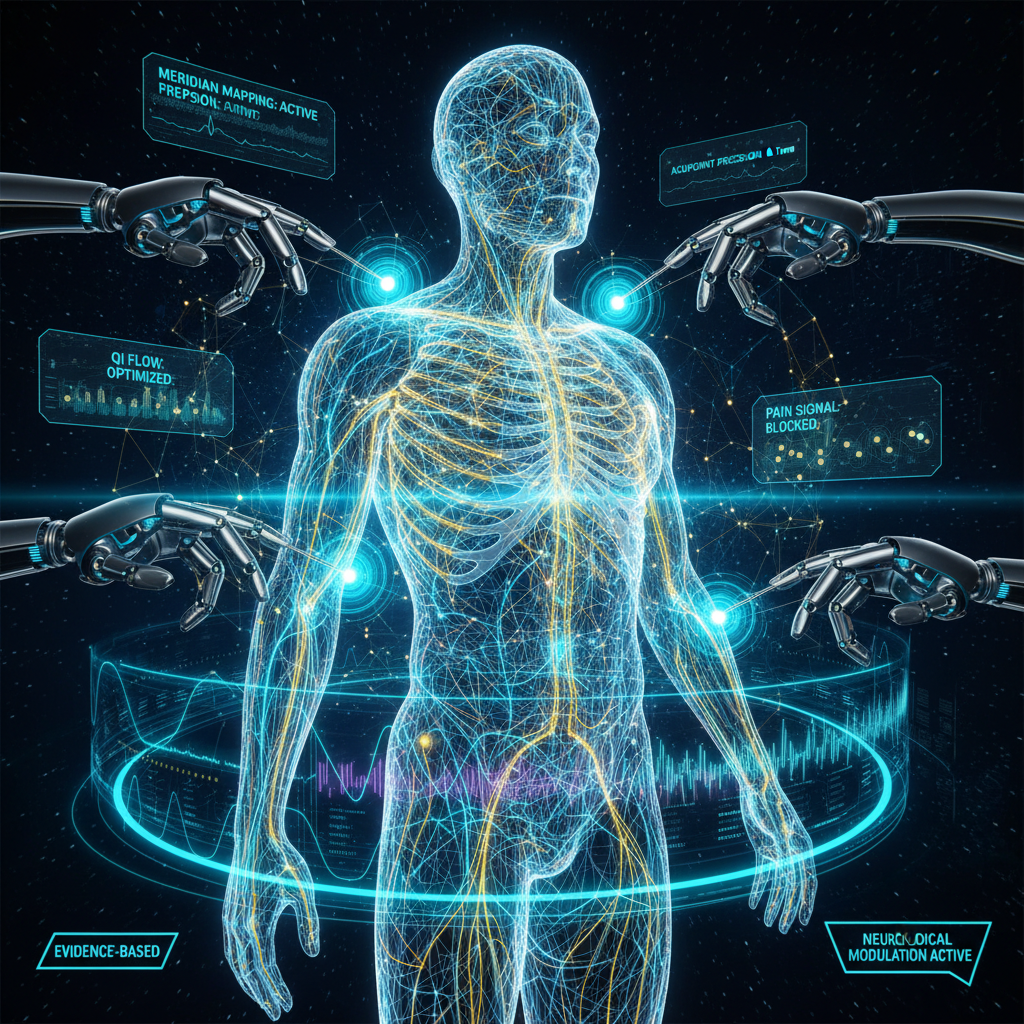
Nobody has a single, settled explanation, and it's worth being straight about that. What research has shown so far is that needling certain points changes how the nervous system handles pain. The leading ideas are:
It changes pain signaling
Stimulating nerves in the skin and muscle appears to dampen pain messages at the spinal cord and in the brain. Imaging studies have recorded shifts in the brain areas that process pain.
It triggers the body’s own chemistry
Studies point to the release of endorphins and other natural pain-modulating chemicals, plus adenosine, which has a role in calming local pain at the needle site.
It relaxes trigger points
When the needle goes into a tight, tender knot in a muscle, the muscle often twitches once and then lets go. That can reduce pain that radiates out from the knot. This approach is often called dry needling, and in a medical setting it sits alongside acupuncture.
It may calm inflammation
Early research suggests an effect on inflammatory signaling. This is the least settled of the four, so we don’t promise it.
What Happens at a Visit
Here is what a typical acupuncture visit looks like, from evaluation to aftercare. See Your First Visit for what to bring to your first appointment.
Evaluation
Your physician reviews your history, imaging, and any nerve testing, then examines the painful area. Acupuncture is only planned once we know what is likely driving the pain.
Point selection
Points are chosen for your condition. Some are near the sore area and some are elsewhere on the body, for example in the hands or lower legs.
Needling
You lie down or sit comfortably. Needles go in a few millimeters to a couple of centimeters, depending on the spot. Most people feel a quick pinch, or a dull ache or heaviness, and then settle in. Many get drowsy.
Rest
The needles stay in for roughly 20 minutes. Some plans add gentle heat or a mild electrical current through the needles (electroacupuncture).
Afterward
Needles are removed and discarded. You may feel loose or tired, or a little sore at a point. Tell us how the next few days go so we can adjust.
What Acupuncture Can Treat
Here is where the evidence is strongest, and where it is thinner.
We don't claim acupuncture treats high blood pressure, infertility, or stroke risk, or helps with quitting smoking or losing weight. The evidence doesn't support those claims at the strength you'd want, so if another site says otherwise, ask to see the studies.
Included in the American College of Physicians’ guideline as a non-drug option
Benefit over no treatment and sham in pooled trial data
Modest improvement in pain and function in many trials
Fewer headache days for many people in reviews of trials
Mixed or lower-quality evidence; reasonable to try as part of a wider plan
NIH consensus panel found promising evidence for nausea and for dental surgery pain
Is It Safe?
For most people, yes. Serious problems are rare when needles are sterile and single-use and the practitioner is trained. The common effects are minor: a small bruise, a spot of bleeding, soreness, or lightheadedness during the first visit.
- Take blood thinners or have a bleeding disorder
- Have a pacemaker or implanted device (this matters for electroacupuncture)
- Are pregnant or might be, since some points are avoided
- Have an active skin infection near the treatment area
- Tend to faint around needles
Acupuncture rarely stands alone here. Depending on your diagnosis, it may be paired with physical therapy, injections, or medication management. A common pattern is to use injections or medication to settle a flare, and acupuncture and therapy to keep you moving.
Your physician sets the order and checks progress every few visits. If you aren't improving by roughly 4 to 6 sessions, we'll change the plan rather than keep going out of habit.
Because it's drug-free, acupuncture can also help some patients lower their reliance on NSAIDs or opioids. That is a decision made with your prescriber, never on your own.
Coverage depends on your plan and why you're being treated. Our front desk can check your benefits before your first visit. Call 1-877-97 NO PAIN, or see our Insurance and Payment Options pages.
Frequently Asked Questions
Ready to Talk It Through?
If you've been living with pain for weeks or months, a consultation is the simplest first step. A physician will review your history and tell you honestly whether acupuncture makes sense for you.
9701 66th Ave, Rego Park, NY 11374
Phone: 1-877-97 NO PAIN
- Mon, Tue, Thu, Fri9 am to 6 pm
- WednesdayClosed
- SaturdayClosed
- Sunday9 am to 3 pm
Serving patients across Queens, including Rego Park, Forest Hills, Elmhurst, Kew Gardens, Middle Village, and Jackson Heights.
- American College of Physicians, 2017 guideline on noninvasive treatments for low back pain (Annals of Internal Medicine)
- Vickers et al., 2018, “Acupuncture for Chronic Pain: Update of an Individual Patient Data Meta-Analysis” (Journal of Pain)
- NIH Consensus Statement on Acupuncture, 1997
- NCCIH, “Acupuncture: What You Need To Know”
- Cochrane reviews on acupuncture for migraine prevention and tension-type headache prevention
This page is for general information and isn't medical advice. Results vary. Talk with a qualified physician before starting treatment.