Tailbone Pain (Coccydynia)
Treatment in Queens, NY
Coccydynia is pain at the very bottom of the spine, in or around the tailbone. It usually follows a fall, childbirth, or months of pressure from sitting, and sometimes it has no clear cause. Most people improve with cushioning, activity changes and pelvic floor therapy. When pain hangs on, image-guided injections such as a sacrococcygeal joint injection or a ganglion impar block can calm it, and surgery is rarely where things end up.
If sitting has become the worst part of your day, you are not imagining it and you are not being dramatic. Tailbone pain is common, easy to dismiss, and surprisingly hard to live with. At Queens Pain Clinic, our board-certified interventional pain physicians have been treating it since 2004, from our office at 9701 66th Ave in Rego Park.
Reviewed by the physicians of Queens Pain Clinic, Rego Park. Last reviewed October 2026.
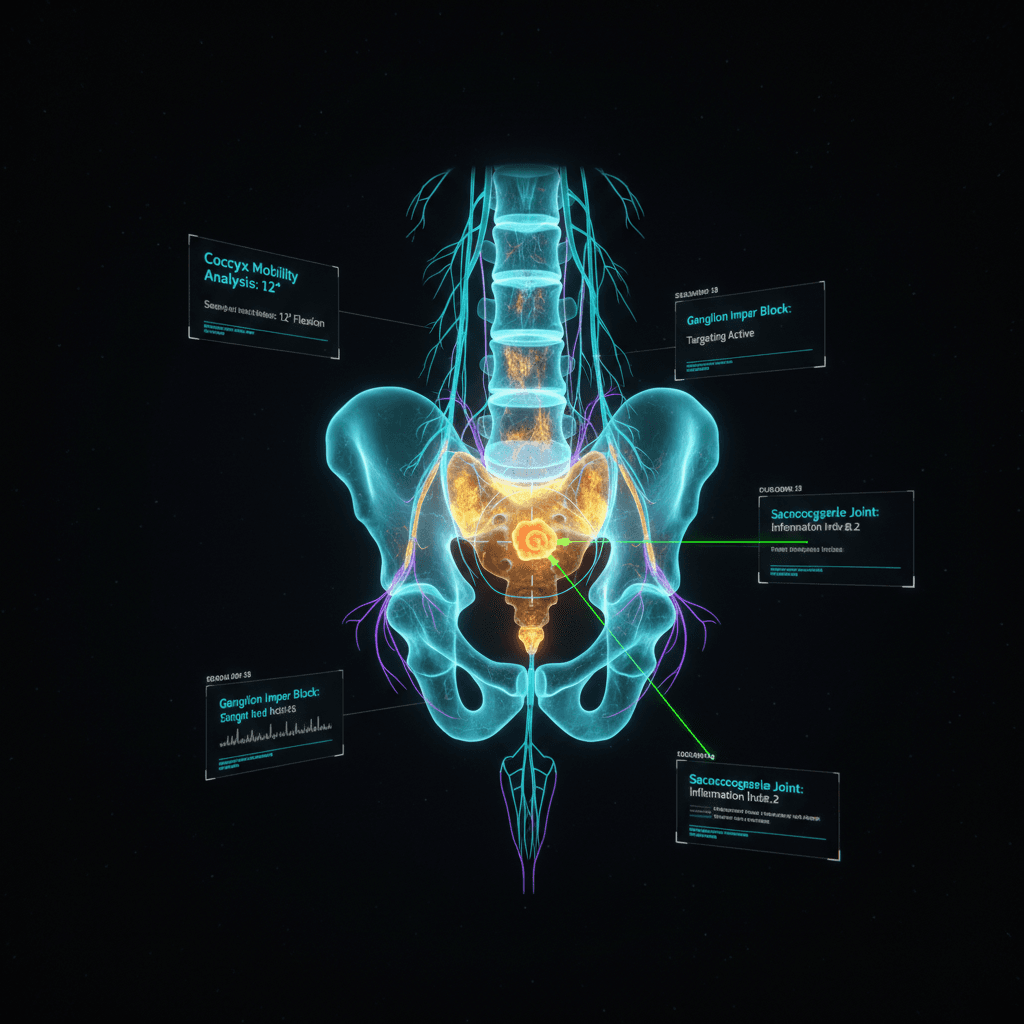
What is coccydynia?
The coccyx is a small, curved bone made of three to five fused segments, tucked below the sacrum. It seems like an afterthought, but pelvic floor muscles and ligaments anchor to it, and it takes a share of your weight whenever you sit. Coccydynia is the medical term for pain that comes from this area.
Most people describe a deep ache or a sharp stab right at the base of the spine. It tends to flare when you sit down, when you stand up after sitting for a while, when you lean back, or when you lie flat.
Women are affected several times more often than men, partly because of differences in pelvic shape and partly because childbirth can strain or injure the joint.
Common symptoms
What causes tailbone pain?
Several different problems can lead to the same pain. Finding the right one is what makes treatment work.
A fall onto the buttocks or a direct blow can bruise, fracture, or dislocate the coccyx.
A long delivery, a large baby, or forceps can strain the sacrococcygeal joint. Pain may start during pregnancy or months after delivery.
Long hours on hard or narrow seats, and activities like cycling or rowing, can irritate the area over time.
A coccyx that moves too much (hypermobility) or too little (stiffness or arthritis at the joint) both cause pain.
Tight levator ani muscles can pull on the coccyx and mimic joint pain.
Research has linked both higher body mass index and rapid weight loss to coccydynia, since either can change how weight is carried when sitting.
In a fair number of people, doctors never find a trigger. This is called idiopathic coccydynia, and it is still treatable.
Less often, pain felt at the tailbone comes from somewhere else: a pilonidal cyst, an infection, referred pain from the lower spine or pelvic organs, or, rarely, a tumor. That is why an actual examination matters more than guessing.
When should you see a doctor about tailbone pain?
Plan an evaluation if pain has lasted more than two or three weeks despite a cushion and some changes to how you sit, if it began after a fall and you cannot sit at all, or if it keeps returning.
Tell your doctor promptly if the pain comes with unexplained weight loss or you have a history of cancer.
- Fever along with tailbone pain
- New numbness in the groin or inner thighs
- Trouble controlling your bladder or bowels
- Sudden leg weakness
How we diagnose coccydynia
We start by listening. When did the pain begin? Was there a fall or a delivery? Which positions make it worse? Then we examine you, checking how tender the coccyx is and how it moves. With your consent, that can include an internal exam, because the pelvic floor muscles can only be assessed that way.
Imaging fills in the rest. Standing and sitting lateral X-rays show whether the coccyx is moving too much, sitting at an unusual angle, or healing from a fracture. We order MRI when the picture is unclear or when something other than the joint could be responsible. Sometimes the most useful test is a diagnostic injection: if numbing medicine at a specific spot switches the pain off, we have found the source.
Tailbone pain treatment options
We begin with the least invasive approach likely to help and move up only when needed.
1. Pressure Relief and Self-Care
A wedge or U-shaped cushion with a cutout takes weight off the coccyx. Leaning slightly forward, shifting position often, and avoiding hard seats help too. Short courses of anti-inflammatory medication can ease flares if they are safe for you. We do not recommend long-term opioids for coccydynia.
2. Pelvic Floor Physical Therapy
A therapist trained in pelvic floor work can release tight muscles around the coccyx, improve posture while sitting, and in some cases gently mobilize the joint. For many people with muscle-driven pain, this is the single most useful step.
3a. Sacrococcygeal Joint Injection
A corticosteroid and local anesthetic placed directly into the joint under fluoroscopy. It suits pain from inflammation, arthritis, or an old injury. Contrast dye is used during the procedure so we can confirm the needle is exactly where it should be before any medication goes in.
3b. Ganglion Impar Block
The ganglion impar is a small cluster of nerve tissue just in front of the sacrococcygeal junction. Blocking it can relieve tailbone pain, and also the deep perineal or rectal pain that sometimes goes with it. Placement is confirmed with contrast dye under live X-ray.
3c. Coccygeal Nerve Block
Medication placed around the small nerves that supply the area, used when the first two do not fully explain the pain.
4. Regenerative Options: PRP and Prolotherapy
For ligament laxity or a joint that moves too freely, PRP (platelet-rich plasma) or prolotherapy may be an option. We are upfront about this one: research on these treatments for coccydynia is still limited, so we usually consider them after more established options, and we will go through the evidence with you before you decide.
5. Radiofrequency Ablation
When a diagnostic block gives clear but temporary relief, radiofrequency ablation can be used to disrupt the pain signal from the nerves involved for longer. How long relief lasts varies from person to person.
6. Surgery, as a Last Resort
If months of well-delivered treatment have not worked, a coccygectomy (removal of part or all of the coccyx) can be considered. It carries real risks, including wound infection, so it is reserved for the small group who fail everything else. If you reach that point, we will refer you to a surgeon we trust and stay involved in your care.
Benefits of Interventional Coccydynia Treatment
Our board-certified interventional pain physicians match the treatment to the source of your pain, start gently, and are upfront about what the evidence does and does not show.
A real examination matters more than guessing, since pain felt at the tailbone sometimes comes from somewhere else
Injections are done under live X-ray guidance, with contrast dye to confirm needle placement
Cushions, activity changes, pelvic floor therapy, and injections help most people — surgery is rarely where things end up
We tell you plainly where research is limited, including for PRP and prolotherapy
What to expect at your visit
Any X-rays or MRI reports you already have, along with a list of medications.
A conversation, an exam, and a plan. If an injection is appropriate, it is done under live X-ray guidance and the needle portion is usually brief.
Numbing medicine can ease the pain within minutes to hours. A steroid, if used, tends to build up over several days. Some soreness at the injection site for a day or two is normal.
Ask our team about driving, activity, and any medications you should hold, since instructions depend on the procedure and your health history.
Conditions we evaluate and treat
Injury & Trauma
- Coccyx fracture, dislocation, or subluxation
- Tailbone injury after a fall or direct blow
Postpartum
- Postpartum coccydynia
- Childbirth-related coccyx injury
Joint & Ligament
- Sacrococcygeal joint arthritis
- Hypermobile coccyx
- Coccygeal ligament laxity
Pelvic Floor & Referred Pain
- Pelvic floor dysfunction and levator ani syndrome
- Idiopathic coccydynia
- Perineal and rectal pain, including overlap with proctalgia fugax
- Piriformis syndrome contributing to tailbone pain
Tailbone pain FAQ
Get your tailbone pain looked at
You should not have to plan your day around where you can sit. Call us or request an appointment online, and ask about same-day availability. We see patients from Rego Park, Forest Hills, Elmhurst, Flushing, Jackson Heights, Kew Gardens and across Queens.
9701 66th Ave, Rego Park, NY 11374
1-877-97 NO PAIN
- Mon, Tue, Thu, Fri9:00 am – 6:00 pm
- Sunday9:00 am – 3:00 pm
- Wednesday & SaturdayClosed
Get your tailbone pain looked at
Call 1-877-97 NO PAIN or request an appointment online, and ask about same-day availability. We're at 9701 66th Ave, Rego Park, NY 11374.
Medical disclaimer: This page is for general education and is not a substitute for medical advice, diagnosis, or treatment. Results vary from person to person. Talk with a qualified physician before starting any treatment.